Fish Audio Alternatives: Prices Per Minute and Licence Terms
Fish Audio voiceover costs 5.5 cents a minute on Plus. We priced four voice tools per minute of audio and read the licence the free plan really grants.
October 11, 2026 · 13 min read

Author
codeBeboo
Search the name and Google hands you the app stores, four pages of fish.audio, and two review videos. Nobody tells you what a minute of voiceover actually costs, and nobody mentions that the free plan bars the one thing a faceless creator needs it for.
So I read the lot. Every figure below came off the live pricing page and the live Terms of Use on 11 October 2026.
Fish Audio pricing, per minute of finished voiceover
It is a text to speech and voice cloning platform run by Hanabi AI Inc., a Delaware company. You paste a script, pick one of the Fish Audio AI voices from a public library or clone one from a short sample, and it returns audio. Four paid tiers plus a free one, and to its credit it publishes all of them, which most of this category refuses to do.
Here is the published plan list, converted to the only unit that matters when you are voicing shorts.
| Plan | Billed yearly | Billed monthly | Minutes/month | Cost per minute (yearly) |
|---|---|---|---|---|
| Free | $0 | $0 | 7 | $0 |
| Plus | $11/mo | $15/mo | 200 | $0.055 |
| Pro | $75/mo | $100/mo | 1,620 | $0.046 |
| Max | $749/mo | $999/mo | 6,250 | $0.120 |
Read that last row again. Max costs 2.6 times more per minute than Pro, the plan directly beneath it. You pay ten times the money for under four times the output. Unless you need the 10 team seats or the 15 professional voice slots, Pro is the ceiling and Max is a worse deal than the thing it upgrades from.
One caveat on every figure above: the page ships a countdown timer and a live promotion flag, so these are list prices rather than a fixed rate. Treat $11 and $75 as the ceiling and check what the checkout screen actually charges.
The free tier is thinner than it looks. Seven minutes a month is seven 60 second shorts, one every four days. Each generation is capped at 500 characters, which at normal narration speed is somewhere between 31 and 39 seconds of speech, so you cannot voice a single 60 second faceless video in one pass. You generate it in halves and stitch them.
The free plan bars commercial use, and the file never tells you
This is the part that matters if you are monetising a channel, and the platform is straight about it in all three places you might look.
On the Free Tier card, two features are struck through with a cross: enhanced voice cloning and commercial use. The FAQ further down the same page repeats it: "Premium subscribers can use verified voices (that you own) for commercial purposes. Free plan users can only use generated content for personal, non-commercial projects." The Terms of Use agree, granting commercial rights only "if you are a user of Paid Services".
Credit where it is due. Three documents, no weasel wording, and that is rarer in this category than it should be.
The problem is that the restriction lives entirely in the licence and nowhere in the output. The only difference the free card names in what you actually get back is standard generation speed instead of priority. No watermark is mentioned, no audible marker, nothing stamped into the file. So a creator tries the free tier, likes the voice, drops it over a video and uploads it to a channel that runs ads, and not one thing in the workflow flags that they have crossed a line.
If your channel earns anything at all, including affiliate links and sponsorships, the cheapest compliant tier is Plus at $11 a month on yearly billing. My view: the $11 is not the story, the invisibility is. Budget it on day one rather than discovering it after 40 uploads.
Where the credit maths stops adding up
The pricing page sells two different units at once and they do not reconcile.
The FAQ states that "each minute of generation costs roughly 600 to 625 credits". The plan cards state a credit allowance and a minute allowance side by side. Divide one by the other and the cards are roughly twice as stingy as the FAQ.
| Plan | Credits/month | Minutes the card promises | Minutes at 625 credits |
|---|---|---|---|
| Free | 8,000 | 7 | 13 |
| Plus | 250,000 | 200 | 400 |
| Pro | 2,000,000 | 1,620 | 3,200 |
| Max | 25,000,000 | 6,250 | 40,000 |
Three plans land near a factor of two. Max lands at a factor of 6.4. Plan for the minutes figure, never the credit figure, and treat anything extra as a bonus. Unused minutes do not roll over, which the FAQ confirms.
One more number worth checking at the till. The yearly toggle says "3 months off", the FAQ says yearly saves 33%, and the plan cards' own "you save" lines work out at 25% to 27%. Trust the "you save" line.
Four alternatives, priced the same way
Normalising this category is harder than it should be, because each vendor sells a different unit. Fish Audio sells minutes, ElevenLabs sells credits where one credit is one character, and video tools sell finished video. Below, every price is the cheapest tier that grants a commercial licence, read off the live pricing pages on 11 October 2026.
| Tool | Cheapest commercial plan | Minutes/month | Per minute | Best for |
|---|---|---|---|---|
| Fish Audio Plus | $11/mo yearly, $15 monthly | 200 | $0.055 | High volume narration on a budget |
| ElevenLabs Starter | $6/mo | ~30 | $0.200 | Short scripts where delivery matters most |
| ElevenLabs Creator | $22/mo | ~121 | $0.182 | Professional voice cloning |
| Fish Speech (self hosted) | $0 plus your GPU | Unlimited | Hardware only | Developers who want no vendor at all |
| Taletok Starter | $27/mo | 100 min of finished video | $0.270 | The whole video, voice included |
Two honest notes on that table. ElevenLabs Creator is roughly 3.3 times the price per minute, and the creators who pay it say the delivery is worth the gap. And the Taletok row is not a like for like comparison: $0.27 buys a minute of finished vertical video with visuals, captions and voiceover, not a minute of bare audio, so it is only the better buy if you were going to assemble the rest anyway.
The self hosted row deserves more attention than it gets. Fish Speech, the company's own open source model, sits on GitHub with 33,000 stars and 2,865 forks and was last pushed to the day before this was written. The licence is non standard rather than one of the familiar permissive ones, so read it before you build a business on it. If you have a GPU and a tolerance for command line work, your marginal cost per minute is electricity.
Worth knowing before you treat any free tier as a loophole: ElevenLabs works the same way. Its free plan carries no commercial licence either, and the Commercial License line first appears on the $6 Starter card as something you are buying. Free narration you are allowed to monetise is not really a thing at this end of the market.
Voice cloning on the free plan is public by default
Fish Audio voice cloning gives free accounts three public voice slots and zero private ones, with the "enhanced voice cloning" line struck out alongside commercial use. Private slots start at Plus. That public and private distinction is doing more work than the pricing page suggests.
Under the Terms of Use, anything you share publicly is a "Public User Submission", and you grant a licence that is "royalty-free, perpetual, sublicensable, irrevocable, and worldwide", including the right to use it for the company's "marketing and promotional purposes" and a licence to every other user to "use and exercise all rights in it". Delete your account and public submissions "may remain fully available".
So on the free plan, a clone of your own voice is a permanent public asset that anyone on the platform can narrate with. For a faceless operator whose voice is the only consistent thing across the channel, that is a real consideration, and the $11 tier is what buys it back.
The homepage counts 2,000,000+ voices in that shared library, which is the number the marketing leads with. Creators in r/TextToSpeech are blunt about what the number contains. One review of the paid product calls the library "user-generated trash" and adds that "if you want 100 voice clones of Donald Trump or egirls, this is the product for you. If you want something professional, you are not going to find much."
The oddest gap I found is in the legal document itself. The Terms of Use are dated 18 August 2024 and, on a platform whose own page title is "Best AI Text To Speech & Free Voice Cloning", the body of those terms contains no clause about voice cloning at all. No consent requirement, no likeness clause, nothing about whose voice you are allowed to upload. The nearest thing is a general ban on infringing "any other rights of anyone else". The obligation is entirely yours, and clause by clause you indemnify the company for it.
What YouTube says about AI voices on a monetised channel
Here the news is better than the faceless community generally believes, and it comes straight from Google.
YouTube's disclosure policy lists examples that do not require disclosure, and one of them is, word for word, "Cloning one's own voice to create voice overs or dubs". Synthetic narration in your own voice is not a disclosure event.
The policy also kills the most repeated myth in this niche in one line: "Disclosing AI content won't limit a video's audience or impact its eligibility to earn money." Ticking the box does not demonetise you. Failing to tick it when you should can, with penalties up to "suspension from the YouTube Partner Program".
What you do have to disclose is realistic content that "makes a real person appear to say or do something they didn't do". That is the library's celebrity clones, exactly.
The bigger risk for a TTS driven channel is not disclosure at all, it is the inauthentic content policy, renamed from "repetitious content" on 15 July 2025 to cover work that is "repetitive or mass-produced". The monetisation requirements ask that content "not be mass-produced, generic, repetitive, or manipulative", and the reused content rules specifically exclude "content that exclusively features readings of other materials you did not originally create, like text from websites or news feeds". A channel that pipes scraped articles through any voice generator is describing the banned example. A channel that writes its own scripts and narrates them with a cloned voice is fine, and YouTube says so: it explicitly allows "using AI to edit your video scripts or generate a unique background visual".
That is the line. It runs through the script, not the voice.
Which one to pick
If you are publishing more than about 30 minutes of narration a month and your scripts are your own, Fish Audio Plus is the best value in this table by a wide margin, and 200 minutes is a genuinely large allowance. Pay yearly, skip Max entirely, and never ship monetised work off the free tier.
If delivery is the thing viewers judge you on and your output is under two hours a month, the best Fish Audio alternative is ElevenLabs Creator at $22, which costs $11 more than Plus for materially better emotional range. The creator in r/TextToSpeech who switched across did it for pause control and inflection, not for price, and said so while calling the move expensive.
And if voiceover is only one step in a pipeline you are assembling by hand, count the other steps before you buy. A separate tool for narration means you are still sourcing visuals, cutting to the beat, burning captions and uploading. Taletok's faceless reels generator produces the finished vertical video with the voiceover already in it, from $27 a month for 100 minutes, which works out cheaper than Fish Audio Plus plus an editor plus your evening. Two free videos, no card required, if you want to compare the output against a file you generated yourself.
Whichever you land on, the first decision is the script. Read how to start a faceless YouTube channel before you spend anything on a voice, because a great voice reading a thin script is the most expensive route to a channel with no views.
FAQ
Does Fish Audio have a free version?
Yes. 8,000 credits a month, capped at 7 minutes of generation and 500 characters per request, with three public voice slots. It needs no card. The catch is the licence rather than the audio quality: the plan card strikes commercial use out, and both the pricing FAQ and the Terms of Use restrict free accounts to personal, non-commercial projects.
Is Fish Audio free for commercial use?
No. Commercial use is struck through on the free plan card, commercial rights attach only to Paid Services under the Terms of Use, and the pricing FAQ limits free users to "personal, non-commercial projects". Plus at $11 a month on yearly billing is the cheapest tier that clears it, and a monetised channel counts as commercial.
How expensive is Fish Audio?
Plus is $11 a month billed yearly or $15 monthly for 200 minutes. Pro is $75 yearly or $100 monthly for 1,620 minutes. Max is $749 yearly for 6,250 minutes, which is the worst per minute rate of the four. In cents per minute of finished narration: 5.5 on Plus, 4.6 on Pro, 12.0 on Max.
How do I get more credits?
You cannot top up a free account into commercial territory, and unused minutes expire at the end of each billing cycle rather than rolling over. Credits reset monthly. If you are running out, the honest fix is Plus, because 200 minutes is nearly 29 times the free allowance for $11.
Can I sell my voice to AI, or clone someone else's?
You can upload your own voice and, on the free plan, every slot you get is public, which grants an irrevocable worldwide licence to the platform and to other users. Cloning someone else's voice without permission is your legal exposure, not the platform's: the Terms of Use contain no voice cloning clause and make you indemnify the company for claims arising from your use.
Is Fish Audio safe to use for a monetised YouTube channel?
On a paid plan, with your own scripts and your own cloned voice, yes. YouTube explicitly lists cloning your own voice for voiceovers as something you do not need to disclose, and confirms disclosure does not affect monetisation. The genuine risk is the inauthentic content policy, which targets mass-produced or scraped material regardless of which voice tool made it.
Continue reading
In this guide series
Ready to put this into practice?
Make your first voiced shortRead more
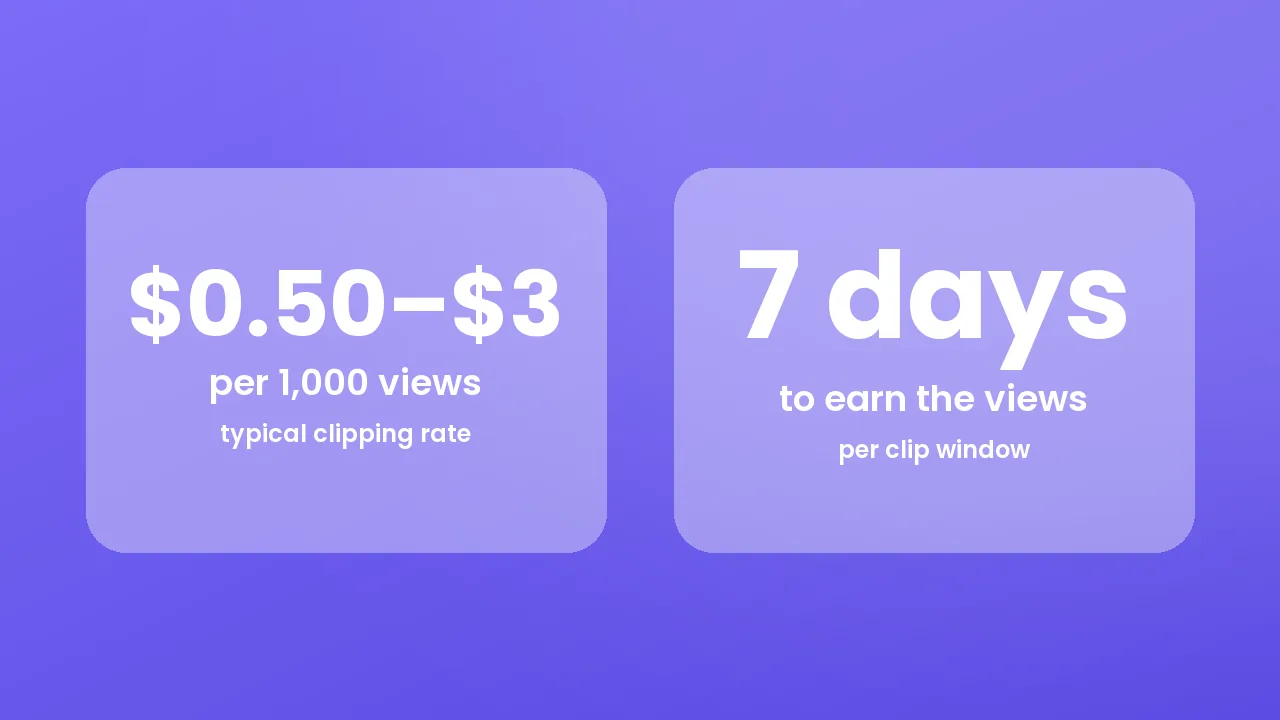
Whop Clipping: What Clippers Actually Get Paid in 2026
Whop clipping pays per 1,000 verified views. The per clip cap, the seven day window and the licence you agree to decide how much ever reaches you.
Blotato alternatives: 5 options and what each really costs
Blotato alternatives compared on live pricing, platform reach and whether they make the video at all. Verified numbers for faceless creators in 2026.
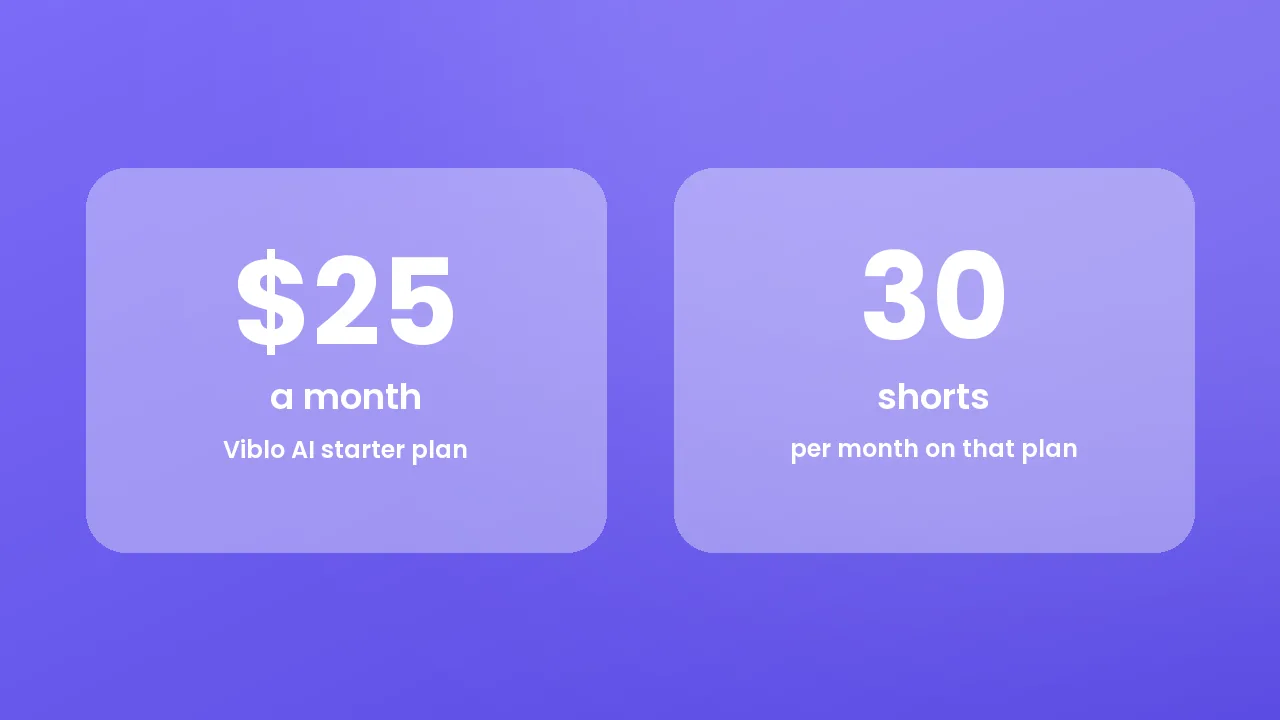
Viblo AI Alternatives: Real Prices and Refund Terms 2026
Viblo AI costs $25 a month for 30 shorts. We costed four faceless video tools per finished short and read the refund policy each one makes you accept.
How much does YouTube pay per view? The real 2026 numbers
How much does YouTube pay per view? There is no per view rate. Here is the RPM and CPM arithmetic, and what a faceless channel actually keeps in 2026.