Narakeet Alternatives: The Real Cost Per Minute of Voiceover
Narakeet sells voiceover minutes outright from 20 cents and they never expire. We priced every pack per minute and read the licence behind the free plan.
October 12, 2026 · 12 min read
Author
codeBeboo
Search this tool's name and Google returns its homepage, its X account, and three review pages written by rival voice companies. Every one of them scores it out of ten. None of them tells you what a minute of narration costs, or whether the free account you are about to monetise actually allows it.
So I read the lot, including the JavaScript that prices the page. Every figure below came off narakeet.com on 12 October 2026.
Narakeet pricing, per minute of finished narration
The pricing model is the genuinely unusual thing here, and the review pages bury it. Narakeet does not sell a subscription. Its own pricing page says the plans are "one-time payments to purchase additional capacity, based on the duration of audio/video materials you produce or transcribe, not recurring subscriptions".
That table renders through JavaScript, so a plain fetch returns five empty cells. The numbers live in the script the page loads, converted here into the only unit that matters when you are voicing shorts.
| Pack | One-off price | Minutes | Cost per minute |
|---|---|---|---|
| Starter top-up | $6 | 30 | $0.200 |
| 300 minutes | $45 | 300 | $0.150 |
| 1,000 minutes | $100 | 1,000 | $0.100 |
| 2,500 minutes | $200 | 2,500 | $0.080 |
| 10,000 minutes | $500 | 10,000 | $0.050 |
The company's own FAQ confirms the span: "Between 0.2 and 0.05 USD/minute of created audio or video."
Now the part that decides whether this is cheap for you. Credits never expire. The FAQ is unambiguous: "The credits do not have an expiry. Any credits you do not spend remain available for you for future use." Billing runs per second of output, so a 43 second short costs 43 seconds.
That one rule is why this suits a new channel better than any subscription in the category. A daily 60 second short burns 30 minutes of narration a month, which is exactly the $6 pack. Post three a week instead and you spend 13 minutes, and the leftover 17 are still sitting there in March. Subscriptions punish the inconsistent month. A top-up does not, and month one of a faceless YouTube channel is almost always an inconsistent month.
Do not plan around the bottom of that table. Reaching 5 cents a minute means buying 10,000 minutes up front, which is 166 hours of speech, or 27 years of one 60 second short a day. That discount is aimed at enterprises localising training libraries. A solo creator lives at 20 cents, or 15 if they commit $45.
One trap before you buy: you are charged when you build, not when you download. "You will be charged every time you build the full result, regardless of whether you download it or not." Iterate on a script five times and you have paid five times. The defence is free and built in. "Previews are free. They do not deduct any credits from your account." Audition on previews, then build once.
The free account cannot be monetised, and one page says otherwise
Here is where a monetising creator gets hurt, and precision matters because Narakeet is better than most of this category on licensing.
Its dedicated usage rights page is about as clear as a vendor gets. "Commercial use is allowed for any content created using a commercial account. There are no ongoing royalties or usage rights for the voices, apart from your regular account cost." Then, in the same plain register: "Commercial use is not allowed for any content created using a free account. You can only use such materials for personal and evaluation purposes."
The account comparison table on the pricing page agrees. Commercial use, free accounts: No. So does a second FAQ answer: "Commercial users get full usage rights."
Three surfaces, one answer. Then there is a fourth. In the general help FAQ, under "Can I use Narakeet voices on YouTube?", the answer reads: "Yes, you can freely use our text to speech voices on YouTube and anywhere else, even for commercial purposes."
No caveat, no mention of account type. That is the page a faceless creator is most likely to land on, because it is the one naming their platform. Read it alone and you would reasonably conclude the free tier is fine for a monetised channel. It is not.
The fix is the cheapest compliance purchase in this category. Buying any pack converts the account to commercial, and because credits never expire, $6 buys permanent commercial rights plus 30 minutes of audio. There is no renewal to forget. Nobody running ads, affiliate links or sponsorships should spend a second weighing this up.
Free accounts are thinner than the review pages suggest: 20 conversions total, a 1 KB cap on audio scripts, no API, no SSML, no batch jobs. That 1 KB is roughly 1,024 characters, which at normal narration pace is 64 to 80 seconds, so one 60 second short does fit in a single pass. Twenty of them, for evaluation only.
Nine hundred voices, three other companies' engines
The homepage headline is "900 voices" across "100 languages". True, and the more useful question is where they come from.
The FAQ answers it: "Narakeet integrates with several voice synthesis services, including IBM Watson, Microsoft Cognitive Services and Amazon Polly." Narakeet text to speech is an orchestration layer over other companies' speech engines rather than a model shop with a lab of its own.
That explains the one complaint which follows this tool everywhere, that quality swings hard by language. It is not inconsistency inside a single model. Pick a Spanish voice and a Hungarian voice and you may be hearing two different vendors. English is dependable; smaller languages inherit whichever supplier covers them.
So audition the exact voice in the exact language on a free preview before you buy anything. A review saying "the voices are good" is a statement about the three the reviewer happened to try, and the Narakeet AI voice library is wide enough that this matters.
What the Narakeet voice generator will not do is clone your voice. Custom branded voices exist, but the FAQ routes you to build one with Amazon, IBM or Microsoft first, then contact sales for a custom plan. If cloning is the point, this is the wrong tool, and how Fish Audio prices voice cloning covers that end of the market properly.
Four Narakeet alternatives, priced the same way
Normalising this category is awkward because every vendor sells a different unit. Narakeet sells minutes outright, ElevenLabs sells credits where one credit is one character, and video tools sell finished video. Below, each row is the cheapest tier that carries commercial rights, read off the live pricing pages on 12 October 2026.
| Tool | Cheapest commercial option | What that buys | Per minute | Expiry |
|---|---|---|---|---|
| Narakeet 30 minute pack | $6 once | 30 min of narration | $0.200 | Never |
| Narakeet 300 minute pack | $45 once | 300 min of narration | $0.150 | Never |
| ElevenLabs Starter | $6/mo | 30,000 characters | $0.15 to $0.19 | Rolls over 2 months |
| Fish Audio Plus | $11/mo billed yearly | 200 min | $0.055 | End of cycle |
| Taletok Starter | $27/mo | 400 credits, 40 Reddit story shorts | $0.68 per finished minute | Monthly |
Three honest notes on that table.
ElevenLabs bills text to speech at one credit per character, so its 30,000 credit Starter plan is 30,000 characters, landing between 31 and 39 minutes of speech depending on how fast your narrator reads. That is 15 to 19 cents a minute, effectively identical to the $6 pack above it. The difference is not price, it is permanence: ElevenLabs credits roll over for two months at most and then vanish, and its free plan carries no commercial licence either. ElevenLabs is still the better audio for emotional range. The top-up model keeps what you paid for.
Fish Audio Plus is cheaper per minute than either, at 5.5 cents billed yearly, verified on 11 October 2026. It is a subscription and unused minutes do not roll over, so the saving is real only if you publish near 200 minutes a month.
The Taletok row is deliberately not like for like. That 68 cents buys a finished vertical video with visuals, captions, music and the voiceover already inside it, not a minute of bare audio, so it only wins if you were going to assemble the rest anyway. Worth saying plainly: Taletok's narration runs on Amazon Polly, one of the same engines sitting behind Narakeet. Nobody here is claiming a secret voice model.
What the terms say, and the words missing from them
Narakeet's terms and conditions were last updated on 26 October 2022, and the operating company is Video Puppet Limited in the UK.
Clause 12.1 defines "your content" to include "the results created from such materials using our audio and video production services", so the finished audio file counts. Clause 12.2 then grants the company "a worldwide, non-exclusive, royalty-free licence to store, and, with your specific consent, publish your content".
Store, and publish only with specific consent. That is one of the narrowest content licences in this category: no perpetual grant, no sublicensing, no right to put your work in their marketing. Having read several of these for the comparison posts on this blog, that clause is a real point in the tool's favour and not one competitor review mentions it.
The absences are just as informative. Across roughly 24,000 characters of terms, the word "voice" appears zero times. So do "clone", "AI", "artificial" and "train". For a product whose page title is about creating voiceovers with realistic text to speech, the contract governing it never once names the thing it makes. The document is nearly four years old and reads it, down to a clause 3.1 listing sub-points (a), (b), (c) and then (e).
On refunds the two surfaces agree, which you cannot assume. The pricing FAQ offers "refunds within 14 days for any unused credits", and the refund policy backs it: a full refund inside 14 days, no reason required, minus a proportional deduction for credits already spent. Mind the mismatch in horizon. Credits last forever, the decision window lasts a fortnight, so test the $6 pack properly in those two weeks before committing $45.
One safety note. Searches around this brand include "Narakeet Mod APK" and "download APK", and nothing legitimate exists for those to point at. Clause 3.1 licences you to use the production services "by means of a web browser". Anything offering a cracked Android build is not from this company.
Picking between them
Buy the $6 pack if your channel is new, your schedule is unproven, and your scripts are in English. It clears the commercial licence permanently, covers a month of daily shorts, and nothing expires while you work out whether you can keep posting. For a faceless TikTok workflow publishing 12 videos one month and 2 the next, no subscription beats that.
Step up to the $45 pack after two consistent months, not before. It cuts the rate by a quarter, and 300 minutes is ten months of daily shorts.
Pick ElevenLabs instead when delivery is what viewers judge you on. The gap in emotional range is real, the entry tier costs roughly the same per minute, and the YouTube Shorts monetization bar is cleared by retention rather than by cheap audio.
If narration is one step of a pipeline you are stitching together by hand, price the whole pipeline first. A voice file still leaves you sourcing visuals, cutting to the beat, burning captions and uploading on a schedule. Taletok's faceless reels generator returns the finished vertical video with the voiceover already in it, from $27 a month, and the free plan makes two videos without a card so you can set the output beside a file you rendered yourself.
Whichever way you go, the audio is not what decides it. YouTube's monetisation requirements target "mass-produced, generic, repetitive" work regardless of which voice tool made it, and Narakeet's own usage rights page says the same in one blunt line: "do not create dull, repetitive, spam content. Make something original." The line runs through the script, not the voice.
FAQ
Is Narakeet free?
There is a free account, but it is for evaluation. You get 20 conversions, audio scripts capped at 1 KB, no API, no SSML and no batch creation, and the pricing page's comparison table lists commercial use as No. Paid capacity starts at $6 for 30 minutes as a one-off purchase rather than a subscription.
Can you use Narakeet voices on YouTube?
Yes, on a commercial account. Buying any pack grants full usage rights with no ongoing royalties, and the usage rights page confirms there are no talent fees for continued use. The general FAQ answer that says you can "freely" use the voices on YouTube omits the account requirement, so do not rely on it while you are still on the free tier.
How much does Narakeet cost?
Between 20 cents and 5 cents per minute of audio or video produced, as one-off top-ups: $6 for 30 minutes, $45 for 300, $100 for 1,000, $200 for 2,500 and $500 for 10,000. There are no recurring charges, and unspent credits never expire.
Is there a Narakeet free trial?
Not a time limited trial. The free account is open ended and capped by usage instead, at 20 conversions. Previews are also unlimited and free on any account, so you can audition voices and pacing without spending credits even after you have paid.
Does Narakeet do voice cloning?
No, not for standard accounts. Its FAQ points you at Amazon, IBM or Microsoft to build a custom branded voice first, then asks you to arrange a custom plan to have it integrated. You can upload your own pre-recorded audio to scenes instead.
Where can I find free text to voice with realistic AI voices?
Free tiers exist across this category, and almost none of them grant commercial rights. Narakeet, ElevenLabs and Fish Audio all restrict free output to personal use. If the audio is going on a channel that earns anything, the cheapest legitimate route is the $6 pack here, because it is the only one that does not renew.
Continue reading
In this guide series
Ready to put this into practice?
Make your first narrated shortRead more
Fish Audio Alternatives: Prices Per Minute and Licence Terms
Fish Audio voiceover costs 5.5 cents a minute on Plus. We priced four voice tools per minute of audio and read the licence the free plan really grants.
Whop Clipping: What Clippers Actually Get Paid in 2026
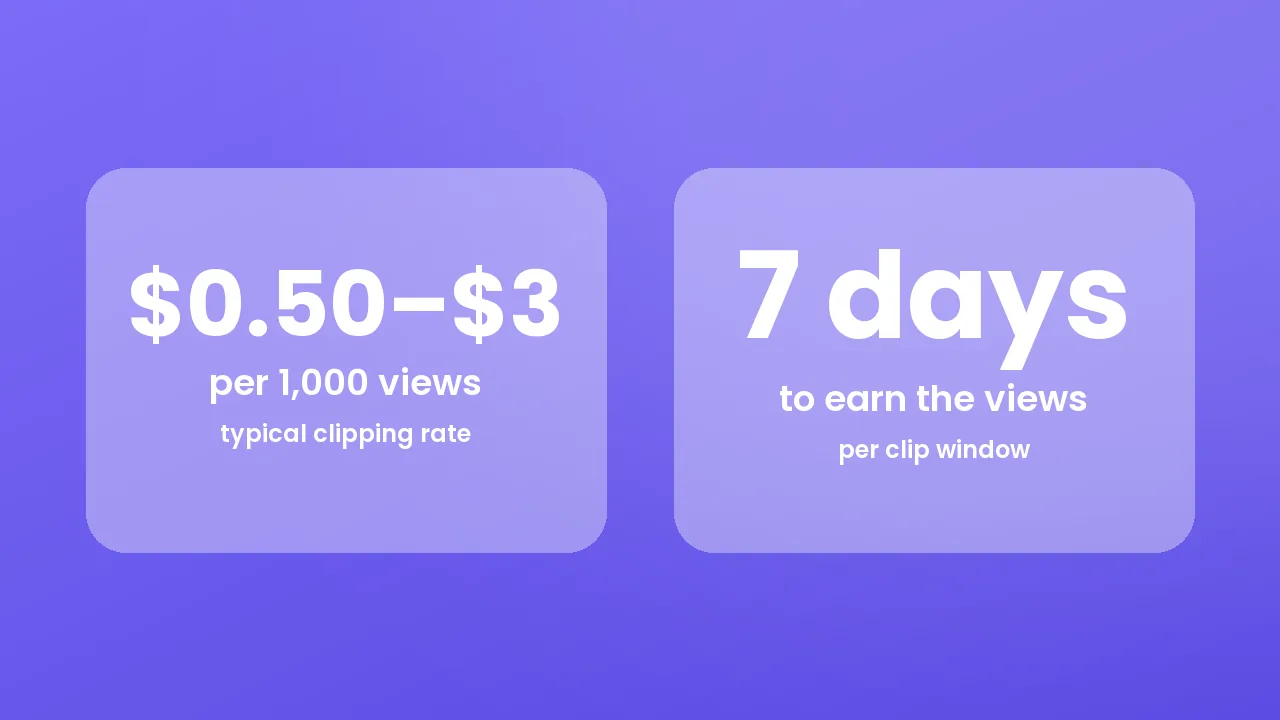
Whop clipping pays per 1,000 verified views. The per clip cap, the seven day window and the licence you agree to decide how much ever reaches you.
Blotato alternatives: 5 options and what each really costs
Blotato alternatives compared on live pricing, platform reach and whether they make the video at all. Verified numbers for faceless creators in 2026.
Viblo AI Alternatives: Real Prices and Refund Terms 2026
Viblo AI costs $25 a month for 30 shorts. We costed four faceless video tools per finished short and read the refund policy each one makes you accept.